
- Topics
- Campaigning
- Careers
- Colleges
- Community
- Education and training
- Environment
- Equality
- Federation
- General secretary message
- Government
- Health and safety
- History
- Industrial
- International
- Law
- Members at work
- Nautilus news
- Nautilus partnerships
- Netherlands
- Open days
- Opinion
- Organising
- Podcasts from Nautilus
- Sponsored content
- Switzerland
- Technology
- Ukraine
- United Kingdom
- Welfare
Piracy, conflict zones, seafarer welfare… and almost becoming an actor: the remarkable journey of Captain James Hofton
2 February 2026
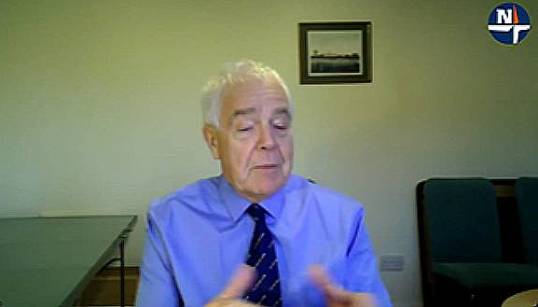
Retired master and long-serving Union member Captain James Hofton is 15 years retired. Here he reflects on his 43 years at sea – from sailing during previous Middle Eastern conflicts and dealing with piracy to becoming one of the first Nautilus International Council members, along with 25 years' voluntary work for retired seafarers as a Nautilus Welfare Fund committee member – plus nearly becoming an actor.
Tell us a bit about your career
I began in 1967 as a navigating cadet with BP, sailing on product and crude oil tankers and progressing through the ranks until 1985. My final years there were as chief officer on VLCCs. My first command came in 1986 with Wallems, one of three manning agencies supplying crews to BP. In 1987, I joined the VLCC SS Eriskay, which was, owned by the China Navigation Company (Swire Pacific Ship Management), and I remained with SPSM until retirement in 2010.
Did you have any personal or family connections to maritime careers?
None, initially, although after joining BP I learnt a distant relative was an engineer there. My interest really came from dinghy sailing as a teenager on the River Trent and competing in national championships. Watching merchant and naval ships in port left a strong impression. When my father spotted an advertisement for cadets, I applied and that launched my career after I had passed the interviews and eye test.
Tell us some of your career highlights
After 43 years at sea, I'm grateful for the extraordinary places I visited – sailing into New York harbour or taking the British Success under the Sydney Harbour Bridge – it was the biggest ever ship to do so at the time, after discharge the height clearance was less than a metre.
Other 'highlights' were more challenging: operating during the Iran/Iraq war and the invasion of Kuwait – witnessing bombing on Kharg Island whilst loading a VLCC at 28,000 m³/hr; and being surrounded by Iranian gunboats on Christmas Day 1987. Thankfully, they targeted another ship, not ours.
But truly, the greatest highlight was simply the sea itself and the privilege of travelling this remarkable planet.
What were some of your biggest career challenges?
After BP made fleet personnel redundant, the move to agency work and multicultural crews created new pressures. At times I could have used an HR manager. My last six years were as permanent master on the Erradale, a 160,000‑tonne bulker. All the officers and crew were Chinese and they were a pleasure to sail with.
Any favourite places you visited?
Not a place, but the South Pacific Ocean. While delivering crude oil from Australia to the US Virgin Islands we set a course via Cook Strait in New Zealand to the Antarctic and Cape Horn, and during that voyage a single large wandering albatross accompanied us, circling for miles and hovering just metres from the bridge wing. Its immense wingspan and calm presence left a lasting impression.
Who helped you the most in your career?
My first captain, Ian McNaughton from Aberdeen. He treated me with kindness and respect, something I vowed to pass on to cadets after encountering some rather indifferent chief officers early in my career. Only later did I learn he'd survived being torpedoed twice in World War Two; he never once mentioned it.
How long have you been a member of Nautilus, and what made you decide to join?
I joined the MNAOA [a Nautilus predecessor union] in the late 1960s on colleagues' advice, particularly for legal support if needed.
Are you a member of any Nautilus Forums, Council or other committees?
I attended the Professional and Technical Forum in the 1990s, and later joined the Nautilus Welfare Fund Committee, where I've now served for 25 years. I've watched Mariners' Park and the NWF transform for the better. I would like to congratulate the executive team for the incredible work they do.
It was at one of these NWF meetings that the late Peter McEwen [a Nautilus former deputy general secretary] handed me a nomination form for Council –determined that masters should be represented. To my surprise, I ended up on the first Nautilus International Council.
Having dealt with pirate attacks since the mid‑1980s, I worked to change the Union's stance on piracy so that ships could defend themselves – years before armed guards became an accepted option on board UK-flagged ships – although only in exceptional circumstances.
In retirement I have continued to be a member. When you have been involved with something so rewarding it is difficult to let go.
What is the one change that would make the biggest positive difference to jobs for maritime professionals?
A revival of UK-flag shipping. As a cadet, joining a British company meant secure employment on passing my certificate. Today, the global industry often pits the best against the cheapest. Governments tend to understand the Merchant Navy's history, not its present. The Union must continue promoting members as world‑class professionals.
The greatest highlight of my career was simply the sea itself and the privilege of travelling this remarkable planet Captain James Hofton
What else have you been doing in your retirement?
I almost became a film actor in the movie Captain Phillips in 2011 – they sought seafarers experienced with Somali piracy. But when my father was hospitalised, I chose to support my parents instead of flying to Morocco to tell Tom Hanks how to run a ship, based on my experience of transiting the Gulf of Aden and encountering Somali pirates.
Are you involved with any maritime charities or volunteer organisations?
For 15 years I've been a trustee of Nottingham Sea Cadets, including time as acting chair/chair. The unit, on three acres by the River Trent, is self‑funded, and I've supported it through giving talks and fundraising. Watching young people grow into confident adults has been deeply rewarding. I step down fully at the next AGM.
What do you like doing in your free time?
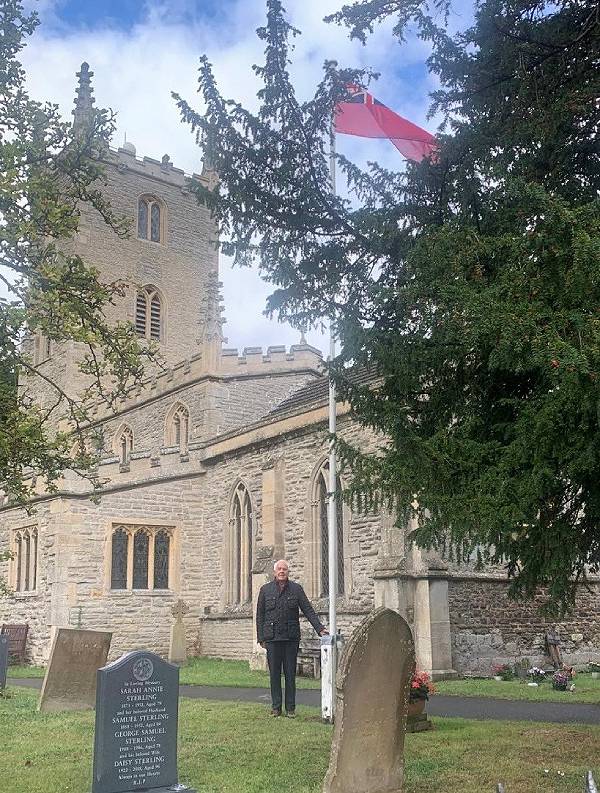
I have many hobbies: astronomy (with my own telescope), golf (never in the rain, after decades on wet foredecks), cricket at Trent Bridge, and football at the City Ground.
I'm a Fellow of the Royal Institute of Navigation and a Liveryman of the Honourable Company of Master Mariners. I also look after the flags and historic clock at my village church.
Tell us one thing that people may not know about you
I have a large family – two daughters, two stepdaughters, eight grandchildren and three great‑grandchildren. I used to wield authority at sea; now, even my wife doesn't take any notice. I do as I’m told!
Is there anything else you'd like to talk about?
My greatest honour was representing the Merchant Navy and Fishing Fleets at the Cenotaph in 2008. The stillness during the two‑minute silence is something I will never forget.
About the Nautilus Welfare Fund
The Nautilus Welfare Fund is Nautilus International's registered charity. It provides support services in the UK for retired seafarers and their dependants and is based at the Mariners' Park Estate in Wallasey, near Liverpool.
The Fund is not just for Union members: all UK retired seafarers who can demonstrate a significant maritime career are eligible to apply for accommodation and grants.
The Fund provides:
- retirement accommodation at Mariners' Park for people living independently or requiring residential or nursing care
- care at home
- one-off grants
- caseworkers – a free and confidential service that helps seafarers claim welfare benefits and access grants
Planning your nautical retirement?
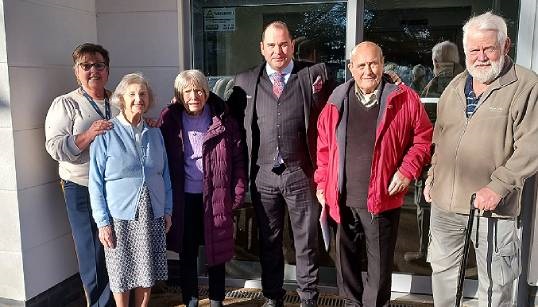
Mariners' Park supports retired and needy seafarers and their dependants who are aged over 55. The park offers a full range of independent living properties; a bespoke supportive living accommodation building for those with care needs; and a 36-bed care home that provides 24/7 care, nursing, dementia and palliative support.
Accommodation is available now for those maritime professionals that have served in the Merchant Navy across all sectors, including maritime pilots and crew on large yachts, as well as those who have served in the Royal Navy.
Arrange a visit to Mariners' Park in Wallasey, UK, to talk about the retirement options or register to have your name added to the accommodation list, by emailing welfare@nautilusint.org or calling +44(0)151 346 8840. There is more information at www.nautiluswelfarefund.org
Tags